About Me
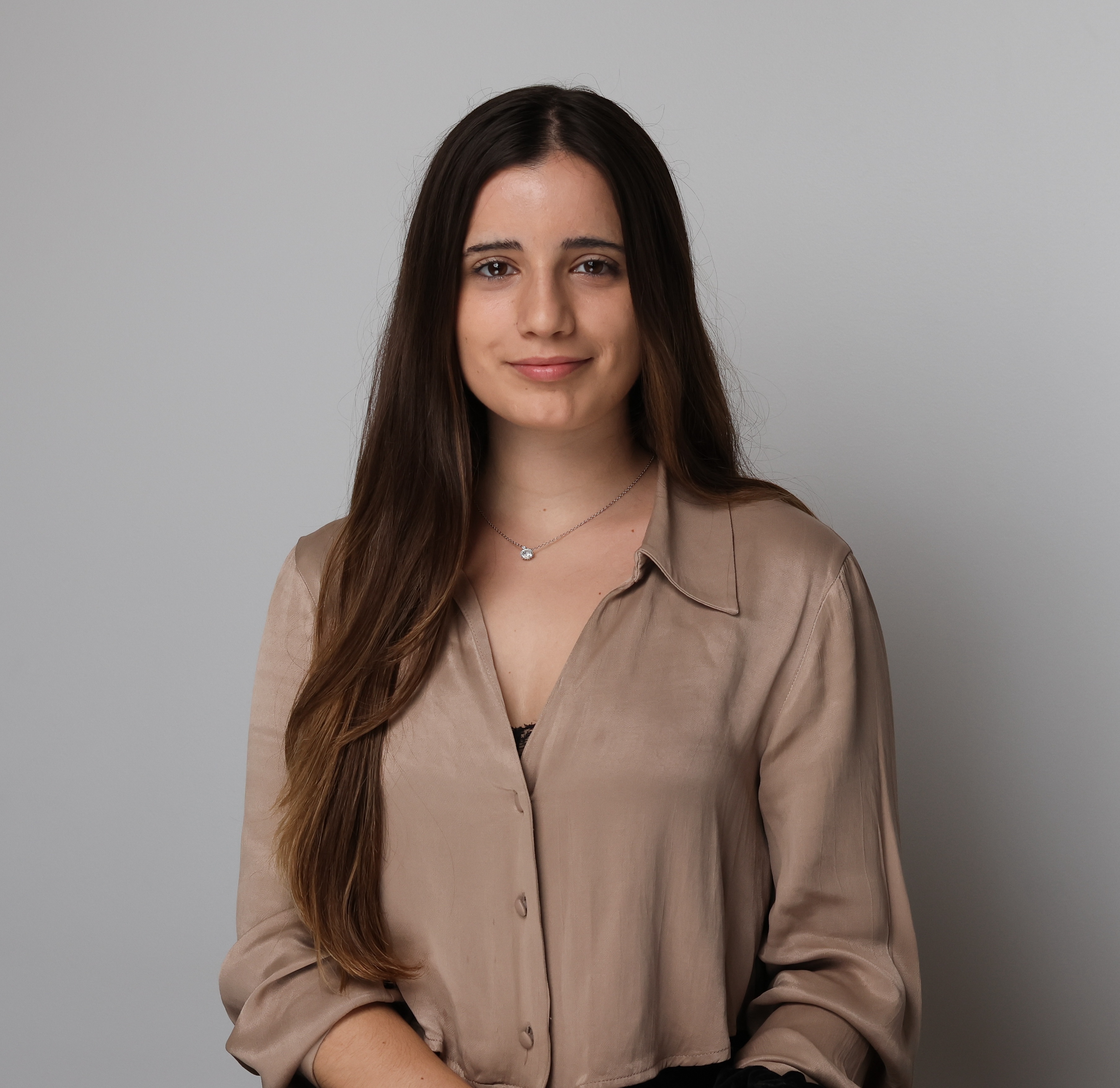
I am a PhD researcher in Computer Science at the Faculty of Sciences of the University of Lisbon (FCUL), working at LASIGE under the supervision of Dr. Cátia Pesquita. I expect to defend my PhD in 2026.
My research sits at the intersection of graph machine learning, neuro-symbolic and explainable AI, and large language models, applied to drug discovery and biomedical decision-making. I build methods that don’t just predict biomedical links over large knowledge graphs, but also explain why a prediction holds, in terms a domain expert can understand and act on. My goal is to develop trustworthy, transparent AI that helps clinicians and researchers turn model outputs into testable scientific hypotheses.
Previously, I was an Assistant AI Researcher at Sony AI in Barcelona, and I am a research fellow on the EU Horizon projects KATY and CancerScan. Earlier, I worked on multi-domain knowledge graph embeddings and machine learning for gene–disease association prediction.
For a structured overview of my work, you can check my CV.
Research Interests
I am interested in many topics beyond these and always look forward to collaborations. If you have a problem you would like to work on together, feel free to contact me.
- Explainable AI (XAI) & neuro-symbolic AI
- Graph machine learning & link prediction
- Knowledge graphs, ontologies & knowledge graph embeddings
- Large language models & agentic systems
- Reinforcement learning
- Hypothesis generation for scientific discovery
- AI for drug discovery & biomedical applications
Selected Publications
- Rewarding Explainability in Drug Repurposing with Knowledge Graphs. S. Nunes, S. Badreddine, C. Pesquita. IJCAI 2025. [paper]
- Multi-domain Knowledge Graph Embeddings for Gene–Disease Association. S. Nunes, R. T. Sousa, C. Pesquita. Journal of Biomedical Semantics, 2023. [paper]
A full list is available on Google Scholar.
Experience
Doctoral Researcher — LASIGE, University of Lisbon (2021–present)
Designing neuro-symbolic, knowledge-infused explainable-AI methods for AI-driven drug discovery, combining knowledge graphs, reinforcement learning, and large language models. Key contributions include REx (reinforcement-learning explanations over biomedical knowledge graphs), agentic personas (LLM-based personalisation of explanations), and ADDEx (an end-to-end explainable-AI platform for drug-development research).
Research Fellow — EU Horizon & national projects (2021–present)
Contributing explainable-AI and knowledge-graph methods to KATY (Horizon 2020 — AI-empowered personalised medicine for cancer), CancerScan (Horizon Europe — patient-specific treatment recommendation in oncology), and TrustAI4Sci (FCT — trustworthy XAI for scientific discovery).
Assistant AI Researcher — Sony AI, Barcelona (2024)
Six-month research internship: ontology-infused graph-embedding pre-training and constraint enforcement, and explainable AI for black-box models.
Teaching
Programming I — Faculty of Sciences of the University of Lisbon
Theoretical-practical classes on programming fundamentals (Python) for first-year students across seven bachelor programmes.
OutSystems — UPskill programme, Faculty of Sciences of the University of Lisbon
Teaching theoretical-practical classes to students without a technological background, giving them the coding skills to build application software on low-code development platforms.
Awards
- FCT Doctoral Studentship — competitive national fellowship (ref. 2023.00653.BD)
- 2nd place, Federated Learning Challenge, WideHealth Winter School 2023
Contact
You can contact me at: scnunes [at] ciencias.ulisboa.pt